
Best Bounty Hunter Metal Detectors in 2026: Full Model Comparison
Pick by budget and experience: the Junior suits kids, the Gold Digger or Tracker IV are the best adult entry picks, and the Land Ranger Pro or Time Ranger Pro add digital target ID and notch discrimination for trashy sites. Every model is a VLF detector from First Texas Products.
The best Bounty Hunter metal detector for most people is one that matches your budget and how serious you are — not the priciest model on the shelf. For young beginners, the Bounty Hunter Junior is the simplest start; for adult hobbyists on a tight budget, the Gold Digger and Tracker IV hit the sweet spot; and if you want target ID with digital readouts and notch discrimination, step up to the Land Ranger Pro or Time Ranger Pro. Every Bounty Hunter is a VLF (very low frequency) detector built by First Texas Products in El Paso, Texas — the same maker behind Fisher and Teknetics — so you're getting a proven, beginner-friendly platform across the whole lineup. Below we break the range into three tiers so you can jump straight to the right one.
New to the brand and wondering who stands behind it? Our overview of who makes Bounty Hunter metal detectors explains the company, its history and where to buy.
Trying to set a budget? Our guide to how much Bounty Hunter metal detectors cost breaks pricing down by tier, and if you are researching an older machine, see the Bounty Hunter Pioneer and other classic models.
Torn between the two best-selling entry models? Our head-to-head on the Tracker IV vs the Gold Digger breaks down which cheap Bounty Hunter to buy first.
Compare the Full Lineup
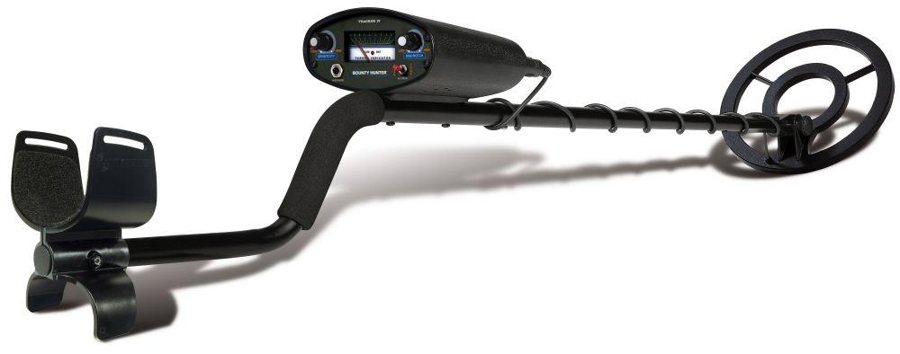
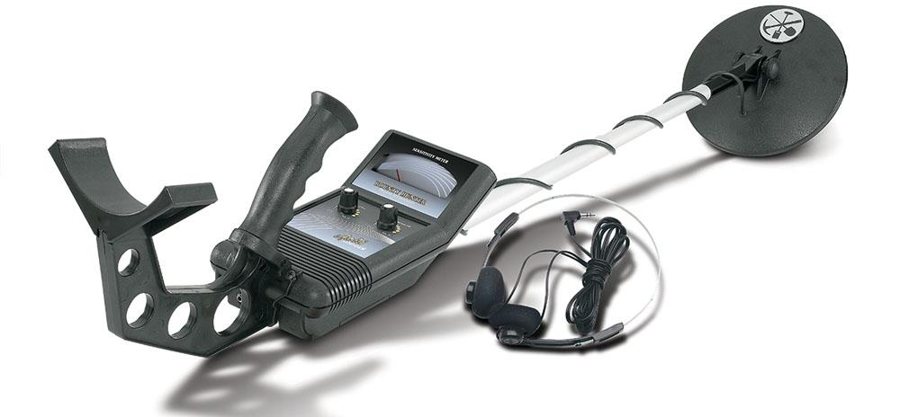
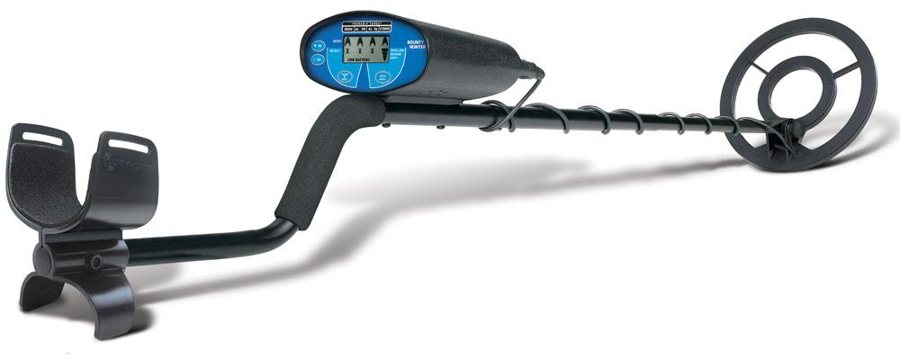
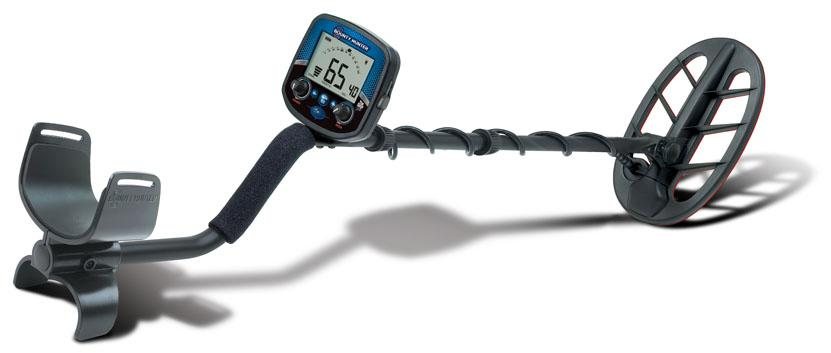
How the Bounty Hunter lineup is organized
Bounty Hunter keeps things simple: every detector is a VLF machine with motion all-metal detecting, and the more you spend the more discrimination, target ID and adjustability you get. The practical differences come down to three things — how the controls work (analog knobs vs. a digital LCD), how precisely you can reject junk (basic discrimination vs. notch discrimination), and whether you get a numeric or icon-based target ID.
- Kids & true entry: lightweight, turn-and-go, minimal settings — Junior, Gold Digger, Quick Draw II, Sharp Shooter II.
- Mid-range: more depth, better discrimination and preset ground handling — Tracker IV, Quick Silver, Fast Tracker, Platinum.
- Digital / advanced: LCD target ID, notch discrimination and more control — Land Ranger Pro, Lone Star Pro, Discovery 3300, Time Ranger Pro.
Coils are interchangeable across many models, so you can add a larger coil for depth or a smaller sniper coil for trashy sites later — see our search coils guide.
Bounty Hunter models at a glance
Here is every current Bounty Hunter metal detector grouped by tier, so you can match a model to your budget and experience in one look. Analog machines use knobs with a needle meter and audio tones; digital models add an LCD target ID and notch discrimination.
| Model | Tier | Controls | Best for |
|---|---|---|---|
| Junior | Kids / entry | Analog | Children and first backyard hunts |
| Gold Digger | Kids / entry | Analog | Cheapest adult way into the hobby |
| Quick Draw II | Kids / entry | Analog + target ID | Beginners who want a visual readout |
| Sharp Shooter II | Kids / entry | Analog + target ID | Coins and relics on a budget |
| Tracker IV | Mid-range | Analog, 3-mode | Best all-rounder for adult beginners |
| Quick Silver | Mid-range | Analog + target ID | Coin and relic hunting with more depth |
| Fast Tracker | Mid-range | Analog | Lighter, quick-recovery detecting |
| Platinum | Mid-range | Analog step-up | Hobbyists who prefer tactile knobs |
| Land Ranger Pro | Digital / advanced | LCD + notch | Trashy, iron-heavy sites |
| Lone Star Pro | Digital / advanced | LCD | Digital target ID at a lower price |
| Discovery 3300 | Digital / advanced | Icon target ID | Depth with a large coil |
| Time Ranger Pro | Digital / advanced | LCD + notch | Flagship features and control |
Whichever tier you land on, the coil and skills carry over if you upgrade later. For the reasoning behind each group, read the tier breakdowns below, or jump straight to the Tracker IV if you just want the safe default pick.
Best for kids and true beginners
If this is a first detector — for a child or an adult who just wants to dig without reading a manual — start here. The Bounty Hunter Junior is short, light and has essentially two controls, making it ideal for younger users in a backyard or park. The Gold Digger is the classic budget adult entry point: a two-knob analog machine that finds coins, jewelry and relics with basic trash rejection. The Quick Draw II and Sharp Shooter II add a bit more sensitivity and discrimination control while staying dead simple. None of these have a digital display — you learn the machine by the audio tone and a needle meter, which is honestly the best way to learn.
Pick this tier if the goal is low cost, low frustration and a gentle learning curve. You'll outgrow it eventually, but the coil and skills carry over.
Best mid-range all-rounders
The mid tier is where most hobbyists should actually look. The Tracker IV is Bounty Hunter's best-selling all-rounder for a reason — a two-tone audio, three-mode design (all-metal, discrimination, and a two-tone hybrid) that handles parks, fields and beaches (dry sand) well. The Fast Tracker is a lighter, quicker-recovery variant, while the Quick Silver and Platinum add more depth and refined discrimination for coin and relic hunters who want to leave junk in the ground.
Choose this tier if you're committed to the hobby but not ready to learn a digital interface. These machines dig deeper and reject iron better than the entry models, and they pair naturally with an upgraded coil down the line.
Best digital and advanced models
Step up here when you want to know what's under the coil before you dig. The Land Ranger Pro and Time Ranger Pro are Bounty Hunter's flagship digital detectors, with an LCD numeric target ID, notch discrimination (so you can accept or reject specific target categories like foil or pull-tabs), adjustable sensitivity and multiple search programs. The Lone Star Pro offers a similar digital experience in a slightly simpler package, and the Discovery 3300 gives you icon-based target ID with a large coil for depth.
Pick this tier if you hunt trashy sites, old home lots or want to be efficient about which signals you dig. The learning curve is a little steeper, but the target ID saves your back over a long day.
How to choose the right model
Work backwards from three questions: who's using it, where you'll hunt, and how much you'll dig. A child or absolute beginner is best served in the entry tier; a regular weekend hobbyist should default to the Tracker IV or another mid-range model; and anyone hunting cluttered, iron-heavy sites benefits from the notch discrimination on the Land Ranger Pro or Time Ranger Pro.
Two more tips: budget for a set of good headphones and a digging tool regardless of model, and remember that coil upgrades are cheaper than a new detector — a bigger coil adds depth, a smaller one adds control in trash. If you're still unsure whether the brand is right for you, read our honest Bounty Hunter reviews and the deeper are Bounty Hunter detectors good? breakdown. You can find owner's guides for every model on our manuals page.
If you are researching an older machine like the Legacy 2500, Prospector or Tracker II, see our guide to discontinued Bounty Hunter models and the current detectors that replace them.
Reviews, Pricing, and Head-to-Head Comparisons
Beyond this roundup, every model above links to its own full review with pros, cons and who it suits - that's the place to go for a "Is the Discovery 3300 any good?" or "Lone Star Pro review" kind of question, not this comparison page. For the brand-wide verdict, read our Bounty Hunter reviews overview or the deeper are Bounty Hunter detectors good breakdown.
Pricing works the same way: this page compares tiers and controls, while how much Bounty Hunter metal detectors cost breaks down what actually drives the price on a given listing. If you're pricing an older machine like the Legacy 2500 or Prospector, those aren't sold new anymore - check discontinued Bounty Hunter models or the vintage Pioneer and Challenger models guide instead.
Already down to two models? Our head-to-head comparisons go deeper than the table above: Tracker IV vs Gold Digger, Land Ranger Pro vs Time Ranger Pro, Platinum vs Lone Star Pro, and Fast Tracker vs Discovery 3300.
Frequently Asked Questions
What is the best Bounty Hunter metal detector for beginners?
For an adult beginner on a budget, the Gold Digger or Tracker IV are the go-to picks — simple analog controls, enough discrimination to skip junk, and a gentle learning curve. For a child, the lightweight Bounty Hunter Junior is easier to swing and operate.
Which Bounty Hunter has the best target ID?
The digital flagships — the Land Ranger Pro and Time Ranger Pro — have the most detailed target ID, showing a numeric value on the LCD plus notch discrimination so you can accept or reject specific target categories.
Are Bounty Hunter detectors good for finding gold?
Bounty Hunter detectors are VLF machines aimed at coins, jewelry and relics rather than tiny natural gold nuggets. They'll find gold rings and coins fine, but for serious gold prospecting you'd want a specialized high-frequency or pulse-induction detector. Despite the name, the Gold Digger is a general-purpose entry model.
Can I use the same coil on different Bounty Hunter models?
Many Bounty Hunter models share a compatible coil connector, so upgraded coils often transfer between machines — but always confirm compatibility for your specific model before buying. See our search coils guide for details on depth vs. control trade-offs.
How much do Bounty Hunter metal detectors cost?
Bounty Hunter is positioned as an affordable, entry-to-mid-range brand, with kids' models being the cheapest and the digital flagships costing more. Prices change often, so check the current price on Amazon for the exact model you're considering.
How many Bounty Hunter metal detector models are there?
The current Bounty Hunter lineup spans roughly a dozen models across three tiers — kids and entry machines like the Junior and Gold Digger, mid-range all-rounders like the Tracker IV, and digital flagships like the Land Ranger Pro and Time Ranger Pro. Older models such as the Discovery 3300 still show up new and used. See the models-at-a-glance table above for the full list.
Is the Bounty Hunter Legacy 2500 still sold, and what does it cost?
No - the Legacy 2500 was discontinued. See our discontinued Bounty Hunter models guide for its closest current replacement, and how much Bounty Hunter metal detectors cost for current pricing by tier.
Where can I find a review for a specific model like the Discovery 3300 or Lone Star Pro?
Every current model has its own in-depth review linked in the models-at-a-glance table above, and our Bounty Hunter reviews hub rounds up the brand overall. If a name you searched doesn't match anything in the lineup - for example there's no "Tracker Pro" or "Quick Draw Pro" model - it's likely a mix-up with the Tracker IV or Quick Draw II.
Ready to check the latest price?
Compare current prices on the full Bounty Hunter lineup on Amazon