
Bounty Hunter Search Coils: Sizes, Compatibility & Upgrades (2026)
The stock ~8-inch coil that ships on most Bounty Hunter models is the right choice until you know your ground: go larger only for depth on open fields, smaller for separation in trashy, junk-filled sites, and always confirm fit before buying a replacement.
A search coil is the round disk at the bottom of your detector that sends and receives the signal, and its size changes how your Bounty Hunter performs. Most Bounty Hunter models ship with a general-purpose coil around 8 inches, which is a good all-rounder. A larger coil covers more ground and adds depth on bigger targets, while a smaller coil gives better target separation in trashy, junk-filled sites. Before buying any replacement or upgrade coil, always confirm it's listed as compatible with your exact model — coil connectors and electronics are not universal across the range.
The coil is just one component - for shafts, covers, armrests and batteries, see our full Bounty Hunter parts guide.
Running an older detector? Coil fit varies on classic machines - our guide to the Bounty Hunter Pioneer and other classic models explains what each vintage model used.
How Coil Size Changes Performance
Coil size is a trade-off, not a straight upgrade. Bigger isn't always better:
- Larger coils (roughly 10-11 inches and up): cover more ground per sweep and reach deeper on larger targets. Great for open fields, pastures, and beaches. Downsides: heavier, and they struggle to separate targets in trashy ground.
- Standard coils (around 8 inches): the stock size on most Bounty Hunter models. A balanced all-rounder for parks, yards, and general hunting.
- Smaller / sniper coils: lighter, more maneuverable, and far better at picking a good target out from between nails and pull-tabs in trashy sites. They trade some depth and coverage for precision.
Coil shape matters too. Concentric coils give tidy pinpointing and depth; wide-scan (DD) coils help in mineralized soil and cover a wider path. Learn to work whichever coil you have with good technique — see our how to use a Bounty Hunter detector guide.
Compatibility: Confirm Before You Buy
This is the part people get wrong. A coil that fits one Bounty Hunter model may not work on another, because connectors and tuning differ across the lineup. Some models are designed around a fixed coil, while others accept interchangeable coils.
Before buying, do three things:
- Check your model's manual or product listing for the coils it officially supports.
- Match the connector type and coil tuning to your detector, not just the physical mount.
- Confirm the seller lists your specific model as compatible — don't assume a coil works because it's the same brand.
If you're shopping around the range, compatibility varies between models like the Land Ranger Pro, Time Ranger Pro, and Discovery 3300, so verify each one individually.
When It's Worth Upgrading Your Coil
You don't need a second coil to enjoy the hobby, but there are clear moments when an upgrade pays off:
- Hunting trashy parks and old homesites: add a smaller coil to separate keepers from junk.
- Working big open fields or beaches: add a larger coil for coverage and depth.
- Detecting in mineralized soil: a wide-scan (DD) coil can run more stably than a concentric one.
If your stock coil is doing the job in the sites you hunt, your money is often better spent on a good pinpointer, headphones, and a proper digging tool first.
Coil Care and Accessories
Coils are rugged but not indestructible. A few habits keep them working and protect resale value:
- Fit a coil cover (skid plate) — a cheap disc that takes the abrasion instead of your coil. Replace the cover, not the coil.
- Rinse off sand and mud after beach or wet hunts; most Bounty Hunter coils are waterproof, but the control box is not, so never submerge the whole detector unless it's rated for it.
- Keep the coil cable wound tight to the shaft to avoid false signals and cable wear.
Not sure which detector or coil fits your goals? Start with our best Bounty Hunter detector roundup, then match a coil to the model you choose.
Stock Search Coil by Model
Every current Bounty Hunter ships with a coil sized and tuned for its tier. The table below lists what comes stock on each model and whether the connector accepts a swap - use it alongside the models at a glance comparison if you are still choosing between detectors.
| Model | Stock coil | Interchangeable |
|---|---|---|
| Junior | Small, kid-sized coil | No - fixed coil, kept simple for young users |
| Gold Digger | Waterproof coil | Yes |
| Quick Draw II | Waterproof coil | Yes |
| Sharp Shooter II | Waterproof coil | Yes |
| Tracker IV (TK4) | 8-inch waterproof concentric coil | Yes |
| Quick Silver | Waterproof coil | Yes |
| Fast Tracker | Waterproof submersible coil | Yes |
| Platinum | Waterproof submersible coil | Yes |
| Lone Star Pro | Waterproof submersible coil | Yes |
| Land Ranger Pro | Waterproof submersible coil | Yes |
| Discovery 3300 | Waterproof submersible coil | Yes |
| Time Ranger Pro | 11-inch DD waterproof submersible coil | Yes |
Most of the mid-range and digital models share the same waterproof, interchangeable design, so an upgrade coil bought for one often bolts onto another in the same tier - but the Junior is the one exception, built around a fixed kid-sized coil rather than a swappable one. Whichever model you own, confirm the exact fit with the compatibility checklist above before ordering.
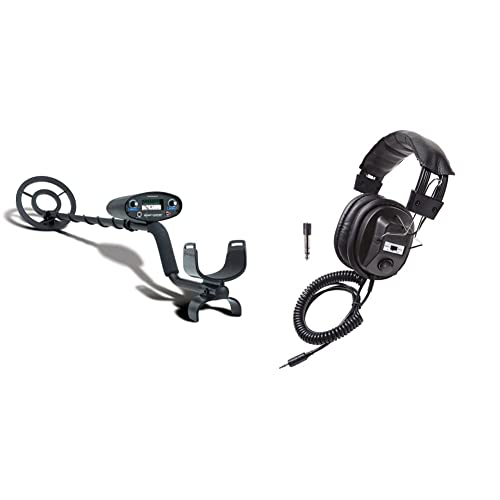
Popular options on Amazon
Prices change often - check the current price on Amazon.


Frequently Asked Questions
Will any Bounty Hunter coil fit any Bounty Hunter detector?
Is a bigger coil always better?
What coil size should a beginner use?
Do I need a coil cover?
Ready to check the latest price?
Check current search coil options and prices on Amazon